
The Hidden Cost of Disconnected Learning Systems and How Modern LMS Platforms Solve It
June 18, 2026
Why Traditional LMS Strategies Are Losing Momentum in 2026 and What High-Performing Organizations Are Doing Differently
June 10, 2026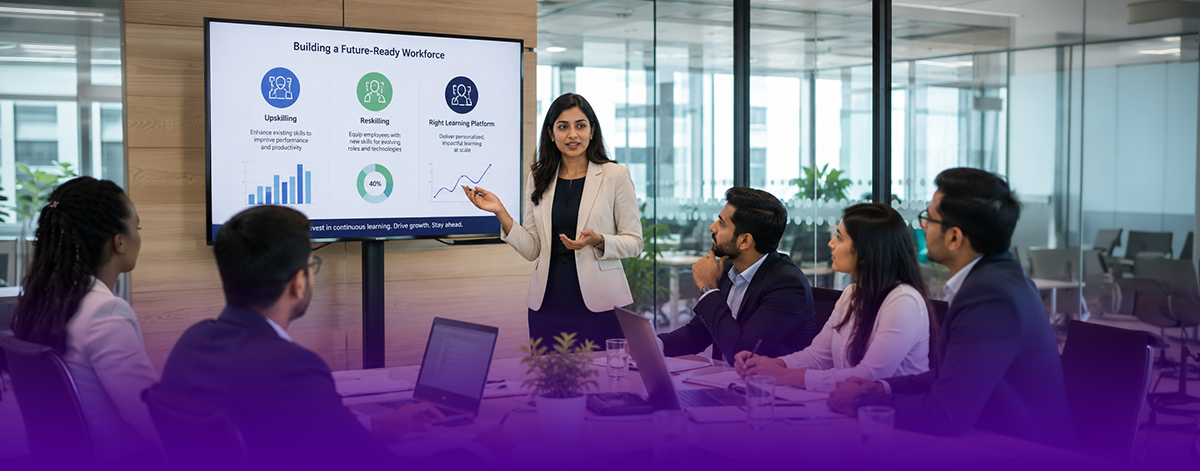
Table of contents
- Why Is the Skills Gap Growing Faster Than Expected?
- What Is Upskilling and Reskilling in Today's Workplace?
- Why Are Organizations Prioritizing Upskilling and Reskilling Programs?
- How Does a Corporate Learning Platform Help Close Skills Gaps?
- Signs Your Current Corporate Learning Platform Cannot Keep Up
- Building a Skills-Based Organization Through Continuous Learning
- Final Thoughts
- Other Articles
Business models continue to evolve, and customer expectations keep rising. While organizations are investing heavily in transformation initiatives, many are facing a common challenge: their workforce skills are struggling to keep pace.
The growing skills gap has become one of the biggest barriers to business performance, innovation, and long-term growth.
Upskilling and reskilling have moved from learning initiatives to strategic business priorities. Organizations are realizing that hiring alone cannot solve the problem. The talent they need often already exists within their workforce. The challenge is identifying, developing, and mobilizing that talent effectively.
Is your learning platform helping you build a future-ready workforce, or is it simply managing training?
Why Is the Skills Gap Growing Faster Than Expected?
The skills gap refers to the difference between the capabilities employees currently possess and the skills organizations need to achieve their goals. While skills gaps have always existed, several factors are accelerating the challenge.
Technology adoption cycles have become significantly shorter. AI, automation, data analytics, cybersecurity, and digital collaboration tools continue to create new skill requirements across nearly every function. Employees are expected to adapt quickly while maintaining productivity and delivering results.
At the same time, many job roles are evolving. Learning and development professionals must have analytical thinking and digital expertise. Sales professionals increasingly rely on AI-assisted insights. Managers need coaching, change leadership, and data-driven decision-making skills.
Organizations are preparing them for continuous change. As a result, workforce capability has become a competitive advantage. Companies that can develop skills quickly are often better positioned to innovate, adapt, and grow.
What Is Upskilling and Reskilling in Today's Workplace?
Although often used together, upskilling and reskilling serve different purposes. Upskilling focuses on helping employees build new capabilities within their current roles. It enables them to perform better, take on additional responsibilities, and remain relevant as job requirements evolve.
Examples of upskilling include developing AI literacy, strengthening leadership capabilities, improving digital skills, or learning advanced technical expertise.
Reskilling, on the other hand, prepares employees for entirely new roles or career pathways. As certain functions evolve or become automated, employees can transition into emerging opportunities that better align with business needs.
Together, upskilling and reskilling create workforce agility. They help organizations develop internal talent pipelines, reduce dependency on external hiring, and support sustainable workforce transformation.
Why Are Organizations Prioritizing Upskilling and Reskilling Programs?
When employees have access to relevant learning opportunities, they become more productive, adaptable, and engaged. Teams can respond faster to market changes. Leaders gain greater confidence in their workforce's ability to execute strategic initiatives.
Upskilling and reskilling also contribute to stronger employee retention. People want opportunities to grow. They want visibility into future career paths and confidence that their organization is investing in their development.
When employees see a clear connection between learning and career growth, engagement often improves. Organizations that prioritize workforce development are also better equipped to support succession planning, talent mobility, and long-term business resilience.
How Does a Corporate Learning Platform Help Close Skills Gaps?
Many organizations already have learning systems in place. However, managing training and developing workforce capability are two very different outcomes.
A modern corporate learning platform helps organizations move beyond content delivery and focus on skills development.
Instead of offering employees endless course catalogs, it creates structured learning experiences aligned with business objectives, workforce needs, and career aspirations.
The most effective platforms function as part of a larger learning ecosystem that supports continuous growth and performance improvement.
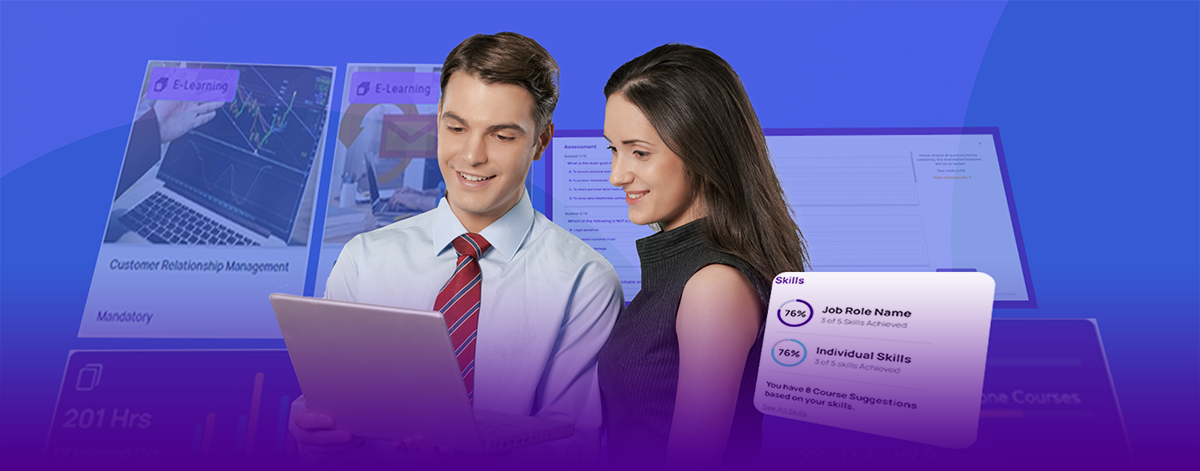
- Skills Mapping and Skills Intelligence
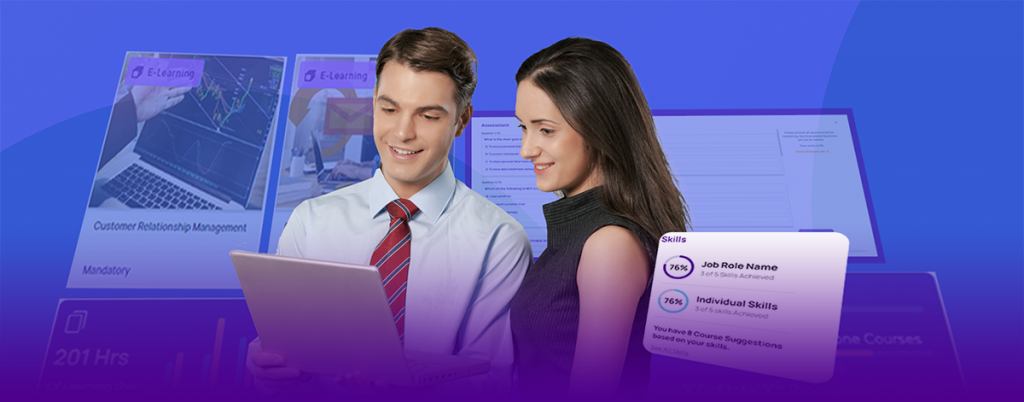
Organizations cannot address skills gaps without understanding where they exist. Modern platforms provide visibility into workforce capabilities through skills mapping and skills intelligence. They help identify current competencies, emerging requirements, and development opportunities across teams and departments.
This enables learning leaders to make more informed decisions about workforce development investments.
- Personalized Learning Experiences
Employees have different goals, strengths, and development needs. A one-size-fits-all learning approach rarely delivers meaningful outcomes.
A modern corporate learning platform uses personalized learning pathways to recommend relevant content, learning journeys, and development opportunities based on an employee's role, career aspirations, skill gaps, and business priorities. This creates a more engaging and effective learning experience.
- AI-Powered Learning Recommendations
Artificial intelligence is transforming how learning is delivered. Rather than requiring employees to search through hundreds of learning resources, AI-powered learning systems can recommend relevant content based on skills requirements, job responsibilities, and learner behavior.
This makes learning more accessible and increases the likelihood of knowledge application.
- Learning on-the-fly
One of the biggest challenges organizations face is making time for learning. Employees balance meetings, projects, deadlines, and customer commitments every day. Learning needs to fit naturally into that environment.
Modern learning platforms support learning in the flow of work by providing access to resources, performance support tools, knowledge repositories, and microlearning experiences exactly when employees need them. This improves retention while making learning more practical and actionable.
- Analytics That Connect Learning to Business Outcomes
Learning leaders increasingly need to demonstrate impact.
A strong corporate learning platform provides insights into learner engagement, skills progression, workforce readiness, and capability development.
These analytics help organizations understand whether learning initiatives are supporting business goals and creating measurable value.
Signs Your Current Corporate Learning Platform Cannot Keep Up
As workforce expectations evolve, organizations should regularly evaluate whether their learning technology supports future needs.
Some common warning signs include:
- Employees struggle to find relevant learning content.
- Learning programs are generic rather than personalized.
- Skills gaps are difficult to identify or measure.
- Managers lack visibility into team development.
- Learning data is disconnected from business outcomes.
- Employees view learning as an event rather than an ongoing process.
When these challenges persist, organizations may struggle to build the workforce capabilities required for future growth.
Building a Skills-Based Organization Through Continuous Learning
The most successful organizations are shifting from role-based workforce planning to skills-based workforce development.
They recognize that future success depends on understanding workforce capabilities and continuously investing in them.
A skills-based organization creates greater flexibility, stronger talent mobility, and improved workforce readiness. Employees gain visibility into growth opportunities. Managers can make better development decisions. Leaders gain confidence that critical capabilities are being built across the organization.
At the center of this transformation is a learning ecosystem designed to support continuous learning, employee development, and workforce capability building at scale.
Final Thoughts
The skills gap is a business challenge. Organizations across industries are facing increasing pressure to adapt to new technologies, changing customer expectations, and evolving workforce demands. In this environment, upskilling and reskilling have become essential drivers of business success.
The right corporate learning platform can help organizations move beyond training administration and create a culture of continuous learning, workforce agility, and long-term growth.
The organizations that thrive in the coming years will not simply be those that hire the best talent. They will be the ones that continuously develop it.
Other Articles